getting to know your creative brain
I care about having enough of myself left for the things I want to make. I work full time at a university, run a creative agency and parent two kids. I also have ideas that belong to me. Things I want to explore without immediately explaining how they will make money.
You can love your life and still wish your own ideas got a better version of you. Sometimes you finally get the time. The house settles, you open the file and spend most of that little opening trying to remember where you left off. Then comes the thought: I had time today. Why did I waste it?
After a few sessions like that, “I am working on something” starts coming with a disclaimer. Hopefully. Eventually. When I get myself together. The project has barely moved, but somehow it has been promoted to a full assessment of your character. That is a lot of responsibility for an unfinished blog post.
Pay attention to where the work gets stuck
An unfinished project can get heavy because it keeps reminding you of the last promise you made about it. You remember how excited you were when you started. Now someone asking how it is going feels less like interest and more like a request for a progress report you did not prepare.
Creative work gives us somewhere to hear ourselves outside the roles we fill for other people. When opening the file starts to feel like another evaluation, we can lose some of the reason we wanted to make the thing in the first place.
Before you decide you are bad at follow-through, look at the last time you tried. What actually happened? “I spent forty minutes comparing platforms” gives you a place to start. So does “I had fifteen minutes and could not find the latest draft.” There is something you can change in those descriptions. “I never finish anything” mostly gives you something unpleasant to carry into the next session.
The five patterns I call creative brain types
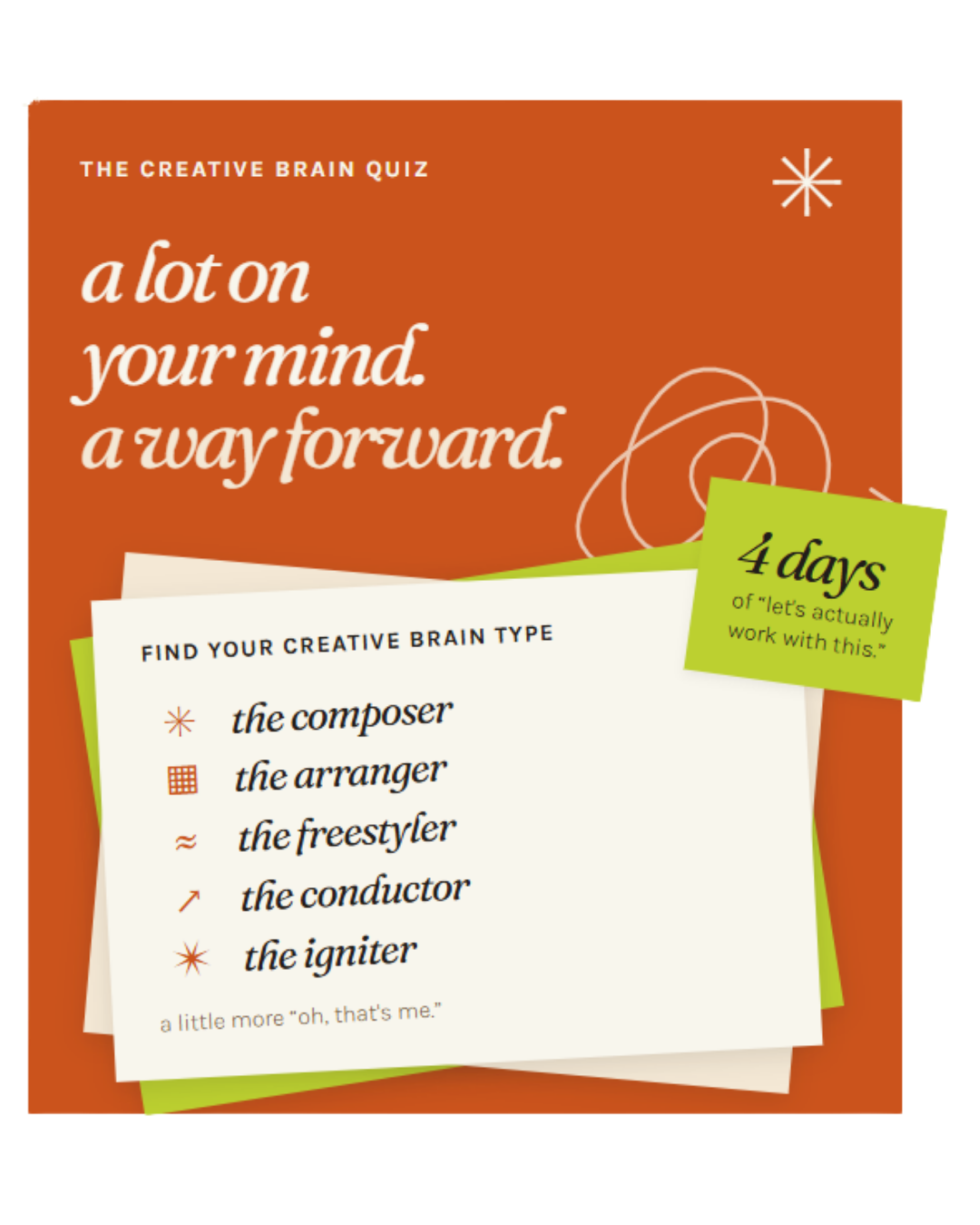
I use five names to describe common places people get stuck in creative work. You might recognize a familiar habit immediately, or see a little of yourself in several. Start with the pattern showing up in your current project.
The Composer: You have ideas and enjoy getting them moving, but the middle gets crowded when a new idea arrives. A clear next step and somewhere to save the new idea can help you return to what you already started.
The Arranger: Preparation keeps offering you another useful thing to do. The project gets more organized without getting closer to anyone seeing it. Defining what this version needs can give the planning a stopping point.
The Freestyler: Your creative rhythm changes, while your plan keeps expecting the same output every week. Matching the work to your available attention gives a quieter week something realistic to hold.
The Conductor: Different parts of your life keep asking for your attention at once. Seeing those responsibilities together can help you decide which one gets your focus now and what can wait.
The Igniter: You know what you want to work on, but beginning takes more effort than the task list admits. A small, specific first action gives you somewhere to enter without agreeing to finish the whole project today.
These are reflection tools, not a clinical assessment or five scientifically established kinds of brains. A quiz cannot diagnose attention difficulties or tell you what you are capable of. Your circumstances can change which pattern needs support, so leave yourself room to change too.
Give the actual problem a say in the solution
Five people can have an unfinished blog post for five different reasons. Handing everybody a more detailed planner might help one person and give another person a brand-new project. Now the post is still waiting, but the planner has a lovely cover.
The useful question is what would make this particular return easier. Someone stuck in research might need to decide what they already know enough to write. Someone pulled between work and home may need a protected half hour with a clear task. Copying the same routine will not necessarily solve both problems.
And some limits need more than a workflow adjustment. Care responsibilities take time. Health needs matter. A week that is already full may require a smaller commitment or support from someone else. You can also choose to stop a personal project because it no longer interests you. Creativity gets to include things you enjoy making without ever turning them into deliverables.
Try one change before collecting five new habits
Choose one project and look at its most recent work session. Keep this small enough to try with the setup you already have:
Describe what happened without grading yourself. Note where your time went and what interrupted you. Use enough detail to spot the obstacle, without turning the note into a case against yourself.
Match one adjustment to that obstacle. Write a first action if the task was vague. Set a stopping point if research took over. Choose the change that addresses what happened.
Check what became easier. After the next session, notice whether you started sooner or spent less time recovering your place. Keep what helped and change what created more work.
If you want help recognizing a pattern, the Creative Brain Quiz has ten questions and takes about two minutes. Your results come with a free four-day mini course for your type. Use the result to choose something to try, rather than another description you have to live up to.
For now, think about the file you keep meaning to reopen. What would help you return without spending the first ten minutes being disappointed in yourself? Leave that next step where you can find it. The person with the job and the family responsibilities still gets to have ideas, and a workable way to spend time with them.